


Nigerian-Minnesotan sisters bring a culture of care to their work as doulas
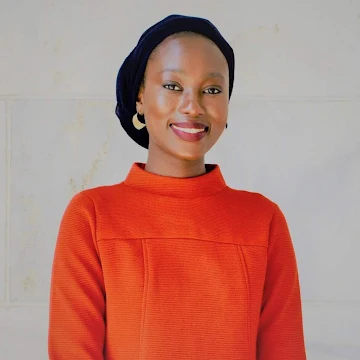

Ade Salami and Abiola Abu-Bakr are sisters from south Minneapolis who co-founded ÀBĪYÈ Collective, a birth and postpartum care collective. Both are birth and postpartum doulas whose partnership is rooted in a culture of care shaped by sisterhood, cultural heritage and community.
In 2023, Black women in the United States died from pregnancy-related causes at a rate of 50.3 deaths per 100,000 live births, compared with 14.5 for white women, according to the National Center for Health Statistics. The disparity underscores the stakes of improving maternal health care for Black families.
For Salami and Abu-Bakr, doula care offers a way to support families through pregnancy, birth and the postpartum period, while recognizing that doulas cannot be expected to fix systemic failures in health care.
A culture rooted in family and heritage
The sisters were born in the United States to Nigerian parents who immigrated in the 1980s to pursue greater educational and career opportunities. They are Yoruba, and in Yoruba culture, names carry great significance. “Ade” means crown, while “Abiola” translates to “born into wealth.” Their collective’s name, ÀBĪYÈ (ah-bee-ye), means “successful birth.”
Their father, who died in 2024, came up with the name.
“He wrote it down and took a picture of it, sent it to us, and we're like, ‘Done. That's the name of it,’” Abu-Bakr said.
“We are very fortunate to have parents that from very early on instilled in us the importance of familial relationships as well as respect for cultural traditions,” Salami said.
Their parents also emphasized the importance of their relationship as sisters. That bond would eventually become the foundation of their doula partnership. Salami said being Abu-Bakr’s older sister is both an honor and a responsibility. Their parents consistently encouraged them to care for one another, nurture their relationship and make their bond a priority as they moved through life.
From professional experience to a shared mission

Salami’s professional background includes serving as a policy aide on the Minneapolis City Council, working in contract lobbying and working at a national pro-democracy nonprofit. Both sisters are University of Minnesota alumni. Salami studied theater for social change and arts administration, while Abu-Bakr earned a Bachelor of Science in nursing and a Doctor of Nursing Practice focused on public health nursing. Abu-Bakr’s experience includes home-visiting work with Ramsey County and global health work with Uganda’s Ministry of Health.
ÀBĪYÈ Collective grew out of Abu-Bakr’s public health and birth equity work at Ramsey County, along with Salami’s encouragement to turn their doula training in 2020 into a community-focused practice.
In the spring of 2020, the sisters were at their parents’ house keeping their mother company when George Floyd was killed near their home in south Minneapolis. They had recently completed the first part of their doula training and later that summer pursued postpartum training.
Abu-Bakr recalled that Salami asked a question that helped turn their training into a business: What if they offered their services to everyone, not just their friends?
The sisters say launching ÀBĪYÈ was a community effort. Support came in the form of website and logo design, as well as donations to their doula fund. Those contributions allowed them to purchase books for continued learning and expand their capacity to provide pro bono services.
The sisters have committed to an operating principle: For every five paid births they support, they provide doula services for one birth free of charge.
Over the past six years, clients have found the sisters through word of mouth, referrals from former clients and other doulas, they said. The primary doula for each client is selected based on availability and personality fit.
“If Ade is the primary doula for someone and I'm their secondary doula, I'm still on call when she's on call, just in case I need to swap in for her,” Abu-Bakr said.
Doulas are not superheroes
National recognition of doulas as complements to the medical care team has grown in recent years. But the sisters say that while doulas can provide critical services and support, they should not be expected to solve systemic problems in health care.
“Doulas are not superheroes,” Abu-Bakr said.
She said doulas have increasingly been positioned as solutions to problems that require broader changes in the health care system.
“Our job is very clear, and it is to provide support, emotional and physical wellness support. It's actually the provider's and the hospital's job to save lives,” Abu-Bakr said.
Supporting agency in the birth experience
The sisters want more people to understand the range of options available to them when giving birth. Salami said some people have access to medical care teams that meet all their needs during childbirth, but that experience is not universal. She said doulas can be particularly valuable for people who want greater agency and participation in their birth experience.
“Medical systems are ultimately designed for sterile, repeatable experiences, things that are supposed to be low risk, easily repeatable, that are in controlled situations, and that's not bad,” Salami said. “However, especially for an experience like birth, that can make it feel like it's happening to you. I think that a lot of people that are giving birth want to have an experience that they feel like they're a part of.”
To learn more about ÀBĪYÈ Collective and its services, visit abiyecollective.com.


Comments