


Online aggression not matching solidarity on the ground, Somali community leaders say
Black diaspora communities in Minnesota are “showing up,” despite divisive rhetoric online
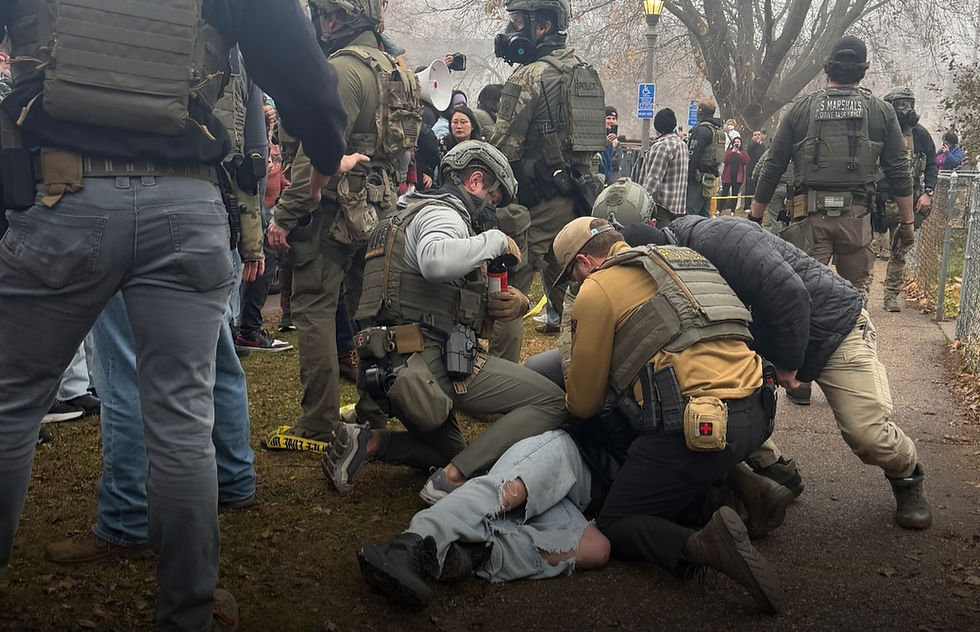
Over the past week, “Operation Metro Surge,” an operation by U.S. Immigration and Customs Enforcement (ICE) descended on the Twin Cities metro area with the mandate to focus on the Somali community who allegedly have final orders of deportation. The number of disclosed federal arrests at the end of Sunday was 19.
The enforcement activity followed President Donald Trump’s call to end Temporary Protected Status (TPS) for Somalis; a sudden halt to immigration applications for nationals from Somalia and 18 other countries already facing travel restrictions and remarks the president made last week that described Somalis in Minnesota as “garbage.” Community leaders say those developments have contributed to heightened fear for Somali residents.
In spite of the ominous spotlight on the community, Minnesotans across the state including the metro area and St. Cloud publicly decried that xenophobic targeting is not welcome.
Malika Dahir, executive director of Reviving the Islamic Sisterhood for Empowerment (RISE), described the weight the community has carried in recent days.

“It’s been an incredibly emotionally taxing time. We are a small community in a larger landscape of the United States and in Minnesota quietly living our lives, and now we’re on a national (stage) getting national exposure being identified and targeted based on how you look. I’m also getting reports from our community members of people who just look Somali, whether they’re Ethiopian or Kenyan – getting picked up and targeted,” Dahir said.
Dahir said the offline response from other Black diaspora communities has been markedly different from what she sees online.
“There’s pockets, especially on the internet and social media, trying to divide us. But that has not been my experience. I’ve experienced moments of real solidarity across Black (diaspora) and other communities, African American communities, from organizers and leaders who immediately recognize that this is a part of state violence and dehumanization,” said Dahir. “They understand what it means to be targeted through stereotypes, and they recognize the false narratives that are being put out there that pit us against each other. The outpouring from community members, leaders, organizers, faith leaders, has been tremendous and consistent, and we’re definitely feeling the love. We recognize that it’s part of a broader system of anti-Black and anti-immigrant violence.”
Yasmin Hirsi, advocacy manager at Our Streets, said the current focus on Somali Americans fits into a broader pattern of federal escalation.

“The rhetoric we’ve been seeing aimed at targeting Somalis and other communities has broader implications for how this administration plans to enforce their immigration crackdown and further strip people of their human rights.” Hirsi said.
On Friday, the Supreme Court agreed to hear the administration’s appeal seeking to uphold an executive order denying citizenship to children born in the United States to undocumented or temporary visitors. The order was previously blocked by lower courts for violating the 14th Amendment. Oral arguments are scheduled for spring 2026.
“But one thing remains true, it will not just be immigrants who will suffer if birthright citizenship is ended. Black, brown, poor, and incarcerated populations will be the next target, which is why the singling of one group in Trump’s tirade should concern us all,” said Hirsi. “History and discernment shows us that once they come for one of us, they are coming for all of us. We all have a duty to remind ourselves of the broader paradigm shifts and struggle that needs to happen as the system continues to uphold these attacks on our human rights.”
Both Hirsi and Dahir emphasized how public language can translate into material harm.
“Calling Somali people ‘garbage,’ calling Palestinians dogs, claiming that Haitians eat pets – this is always a tested ground,” Dahir said. “We’ve seen this when they call our communities diseased or dangerous or less than human. These kind of lies justify sub-human treatment that makes it OK to surveil, to follow, to raid – it’s part of a bigger blueprint when people are portrayed as a sub-human or animal, it justifies treating them like criminals or disposable. It becomes easier to accept their disappearance, their detention.
“What I need the diaspora, and really everyone, to understand is that what happens to Somalis, it mirrors what happened with our Haitian sisters and brothers. It’s already happened with our Latino sisters and brothers. It’s happening with our Palestinian sisters and brothers. Ignoring it or being fearful and hiding makes it easier for the system to expand these tactics. When we protect our Haitian sisters and brothers and our Somali sisters and brothers, our African American sisters and brothers, we are standing up and protecting all our collective safety and dignity against a system that’s targeting us all.”
Hirsi added, “Acknowledging harmful rhetoric that leads to normalization of violence towards a specific group is very important.”
Looking toward the future, both leaders say they aim to foster the care that comes from communal support.
“I’m hopeful. I’m hopeful that this will bring us together and help us bring a new era of solidarity (and) cross community collaboration and not each community living in silos,” Dahir said.
Hirsi encouraged residents to take practical action.
“If you’re grabbing a cup of coffee, groceries, and/or a meal, make sure to support Somali-owned businesses. Donate to local organizations that are doing rapid response, coordinating legal support, and dispersing information like the Immigrant Defense Network and Council on America-Islamic Relations (CAIR). Get involved in your neighborhood and organize with your neighbors.”


Comments