


Sisters in Service: Ashley Booker leads YWCA St. Paul in advancing health equity and opportunity
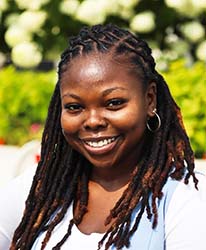

As Women's History Month continues, Power 104.7’s “Sisters in Service” series highlights Black and BIPOC women leading nonprofit organizations and creating meaningful change in the communities they serve.
Ashley Booker is on a mission.
The CEO at the YWCA St. Paul, an organization dedicated to eliminating racism and empowering women through programs that address housing, economic advancement, health and wellness and leadership development, Booker has served as CEO for more than two years, leading the organization with a history that goes back for more than 120 years.
“Our mission is eliminating racism; empowering women,” Booker said.
At the St. Paul branch, that mission is rooted in health equity and community stability. The organization operates a wellness center that provides programming for community members and facilitates workforce development initiatives that help individuals advance their careers. In addition, it offers housing programs that include both transitional and permanent support.
In total, YWCA St. Paul operates 57 housing units that provide stability for individuals and families.
Community leaders say that impact is felt across St. Paul.
Hal Reynolds, founder & CEO of Disinvested Youth Gaming Initiative, said the organization plays a role in supporting residents navigating systemic barriers.
“YWCA is a staple for the community,” Reynolds said. “Ashley is connected and understands what the community needs. What must change and why.”
Reynolds adds that the organization helps bridge gaps for individuals who may struggle to access resources on their own.
“The YWCA fights to make these priorities a reality for the many that can't navigate all the red tape without them,” he said.
In addition, the organization exposes young people to civic leadership opportunities through partnerships with organizations such as the Women's Foundation of Minnesota and the governor's office, helping to teach youth about policymaking and advocacy.
Booker said the organization's work is majority focused on Black women and families in the St. Paul metro-area.
“About 90% of those that we serve through our economic advancement and housing programs are Black or African American. That's really who we've served historically,” she said.
Much of that work is centered in the historic Rondo neighborhood, where the organization’s headquarters sits along the corridor of Selby and Western avenues, an area experiencing renewed cultural investment.
Booker’s path to nonprofit leadership was not one she originally envisioned. Growing up, she believed she would become a pediatrician and followed a pre-med track when she enrolled at the University of Minnesota. However, after realizing science was not a right fit, she began to explore other academic interests. That search eventually led her to sociology.
“I really fell in love with studying people and societies and understanding how systems impact the quality of life people have,” Booker said.
Her studies interests stemmed from persistent inequities she saw in education and the criminal justice system. Her degree is in Sociology of Law with an emphasis on crime and deviance. That academic focus ultimately led her into nonprofit work.
Over the course of her career, Booker has worked across multiple sectors addressing systemic inequalities, including roles in education, state government and reproductive health.
She previously worked at College Possible, supporting college access initiatives, later moving into higher education leadership roles at the University of St. Thomas, eventually serving in a state position overseeing Minnesota’s college access programs. Booker also held executive leadership roles at Planned Parenthood, where she focused on education and community engagement.
Despite the variety of roles she has held, Booker said one theme has remained consistent throughout her career.
“I wanted to work on racial equity issues,” she said. “I wanted to make sure I was choosing opportunities that would allow me to help my community; the community that raised me.”
Today, that commitment is reflected in YWCA St. Paul’s programs, which aim to address the interconnected factors that influence health and stability in a community.
Stable housing, Booker said, is one of the most critical predictors of long-term health and economic success.
“You can't really advance economically if you're worried about where you and your family are going to stay tonight,” she said.
The challenges facing communities have only intensified in recent years. Booker said the organization has seen rising needs related to food insecurity, uncertainty and concerns surrounding federal benefits going away overnight.
During Operation Metro Surge, which brought a barrage of federal agents to the state focused on rounding up undocumented immigrants, particularly from Black, brown and Asian communities, the St. Paul YWCA partnered with local organizations to deliver food and essential resources to families who were unable to go to work, or felt unsafe leaving their homes.
Reynolds said efforts like these show the organization’s ability to respond to community needs.
“They have given hope and new amazing possibilities to the amazing humans they serve,” he said. “This is done again by listening, then having the courage to create meaningful change.”
As a leader, Booker says the work in these times has reinforced the importance of resilience and self care, particularly for Black women leading organizations that serve their own communities.
“I can't run an organization well and take care of other people well if I am not putting as much energy into taking care of myself,” she said.


Comments