


Violence against journalists is America’s new normal … and it’s unacceptable

Back in 2016, just days before the November presidential election – a most consequential election – I was in St. Petersburg, Florida at the Poynter Institute for an opinion writers seminar. I was in an impressive cohort of writers from across the nation, and in fact other parts of the world.
Most of us shared the assured belief that the country was about to elect its first woman president because there was almost no way the voters would select a man so crude, so divisive. In any other time, this man chosen to represent the Republican party would have been immediately disqualified for mocking a disabled journalist, for going after a judge because of his Hispanic heritage … for being caught on a hot mic saying he had dominion over any woman’s body, entitled to grab in the most sacred of places because he was “a celebrity.” Therefore our “assurances” were valid. But just for giggles, as a writing exercise, we threw out the improbable scenario of what if this rude, crude, divisive man won.
One writer offered a somewhat satirical piece of Americans fleeing to Mexico – keeping in mind the key tenant of the soon-to-be 45th president’s campaign was, “build a wall” keeping those south of us from coming up to the U.S. But what stood out then – and strikes an ominous cord now – is the testimony of a few in our cohort who faced persecution from their governments for their journalistic efforts to hold officials accountable. In 2016 America, their stories seemed so unfathomable. At least unfathomable here.
Going into 2026, nearly 10 years post, this is now our reality. At the Center for Broadcast Journalism we’re training the next generation of journalists to advance representation in media. As a part of that training, we are now updating our curriculum to reflect the times in which we live, which sadly means we have to offer sessions dedicated to field and online safety.
Violence or threat of violence against journalists in America isn’t new, but it wasn’t by any means the norm. It certainly wasn’t championed. Here in Minnesota, we have a checkered recent history.
In 2020, during the uprisings post the murder of George Floyd, a reporter and camera crew from CNN were arrested live on air in Minneapolis. Their “crime?” Doing their jobs. Yes, that’s why they were arrested. For reporting.
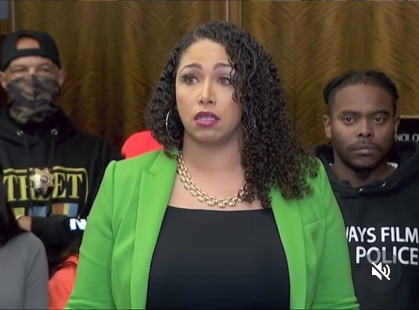
A year later, the president of the Center for Broadcast Journalism, Georgia Fort, was struck by “less lethal” munitions and gassed while covering the uprisings following the murder of Daunte Wright in Brooklyn Center. It was during those same uprisings where I was placed under arrest for reporting on law enforcement actions during the days of protest. For me, mental scars from that arrest have yet to be erased. I will say that’s also true for Georgia. I don’t have to ask her, I know. And to be honest, it hurts to know the pain a fellow journalist is going through – let alone the journalist closest to me professionally.
On Nov. 25 ICE agents descended upon St. Paul to execute an arrest, and as a part of our job – the central part of our job – area journalists arrived on scene to document both in real time and for history, the actions of the day. They were there to document the actions of ICE, of the protesters and, as it turns out, the actions of the St. Paul police. And while I personally have issues with the actions of those acting on behalf of the federal government, it was the actions of the St. Paul Police Department that were on that day most egregious. The assaulting of physically noncombatant protesters with chemical agents is egregious in itself. Full stop. To assault members of the press with those harmful chemical agents is both egregious and absolutely unacceptable. But that’s exactly what happened. Again, before 2016, in the “land of the free” actions such as this were almost unfathomable. Now it’s expected.
And the tactics of state sponsored violence are working.
Just ask Georgia Fort. Wait, let me put the full respect on her name – three time Emmy-award winning Georgia Fort. As other journalists were being assaulted – and that’s exactly what it was, assault – Georgia, the prior victim of police assault for doing her job, had to make an in-the-moment decision to step back from the frey. She remained on the scene, she kept her camera rolling, but for her safety, she made the difficult, but correct choice to step back. Her reasons were simple and the most understandable. She had to get home to her family.
And that’s literally where we are now. As journalists, simply doing our job could temporarily or permanently separate us from our families, from our friends, from our earthly existence.
I halfheartedly joke that I know I’m on some government watch list. But the joke is missing a punchline. It’s a fear many of us in this profession have. Many feel we’re one wrong word away from being removed from our posts, from the streets – from our lives – over the words we speak and the pictures we broadcast.
Sadly, the threats are being amped up by followers of the current (and former, twice impeached) president as well. In addition to the arrest and assault, Georgia and I have each received death threats for our reporting. And we’re not alone. According to a survey conducted by the International Women’s Media Foundation, 597 respondents – 36% – reported being threatened with or experiencing physical violence while working as a journalist. That’s about 597 too many.
Some will say that’s the risk associated with the job. I say that’s bull. To take it to the social media streets, “how Sway!?” How is being barraged with threats of death – acts of physical violence – a part of the job? As journalists we sign up for a lot, but this damn sure ain’t what we signed up for.
This can’t be our new normal. Violence against and targeting of the press shouldn’t be tolerated nor championed. Freedom for the press is enshrined in the very first amendment of our Constitution. It should be absolute.
In geometry, a "given" is “any piece of information that is accepted as true at the start of a problem or proof without needing to be proven.” In being a journalist, being safe from violence should also be a “given.” Getting home to one's family should be a given.
In an age of division, can we at least come together on this? Can we? The question isn’t rhetorical – and it deserves an answer in the affirmative.


Comments